
Summary
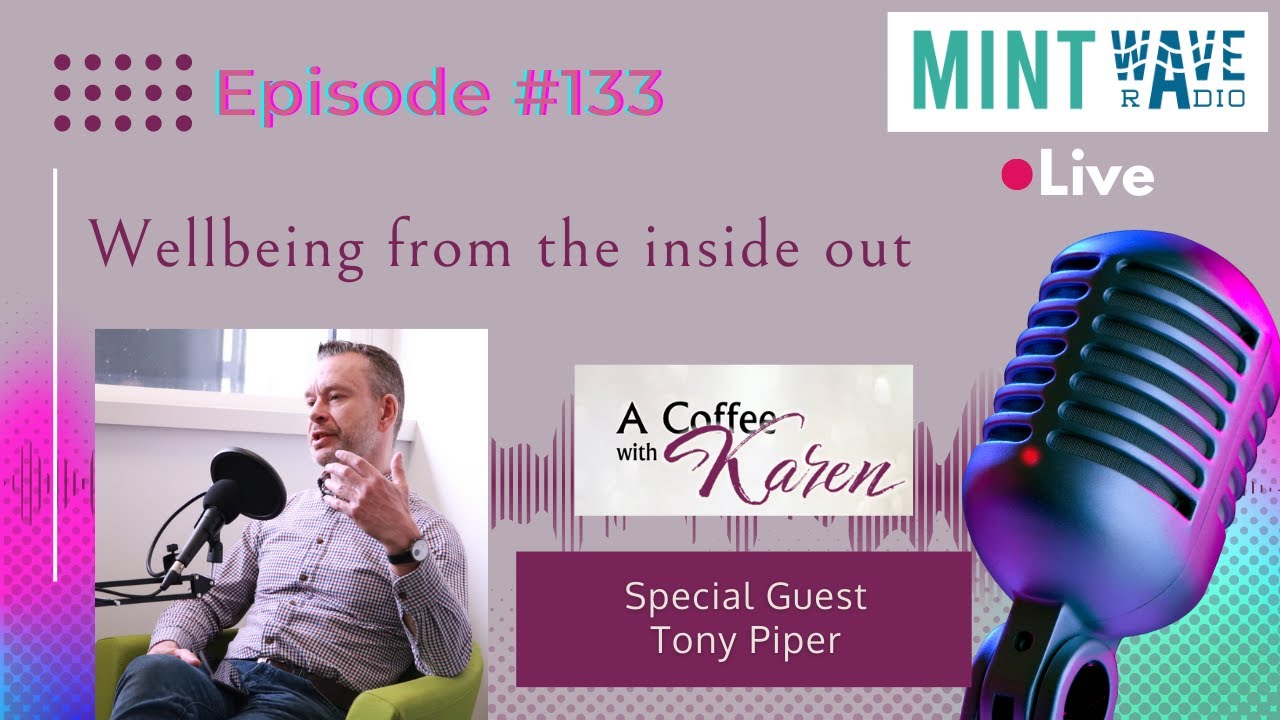
Tony Piper, a certified Clarity coach, discusses well-being from the inside out on Coffee with Karen podcast, sharing insights about leadership and personal growth.
Ideas
- Being curious about negative feedback can lead to transformative personal and professional development opportunities.
- Children naturally demonstrate the transient nature of moods, quickly moving past negative experiences without dwelling.
- Separate realities exist for each person, with everyone perceiving and experiencing the world differently.
- Medieval thinkers distinguished between ratio (analytical thinking) and intellectus (innate wisdom) as different ways.
- Modern education focuses heavily on intellectual knowledge, potentially suppressing natural creativity and intuitive understanding.
- Human beings are constantly creating their experience through thoughts, stories, and interpretations of events.
- The retina is physically part of brain matter, suggesting eyes function more as projectors than cameras.
- People tend to notice only what resonates with their existing beliefs and patterns of attention.
- Negative emotions serve as "rumble strips" to alert us when we're moving away from well-being.
- Journaling about problems can sometimes reinforce negative stories rather than facilitate genuine healing.
- Leadership dysfunction often stems from being disconnected from natural well-being and inner wisdom.
- External solutions like yoga and meditation are tools but aren't necessary for accessing inner peace.
- People naturally know how to handle situations when they're in touch with their authentic selves.
- Focusing on problems rather than solutions keeps people stuck in negative patterns and experiences.
- The mind works best when calm and centered, not when stressed or overthinking situations.
- Corporate environments often prioritize constant action over beneficial periods of stillness and reflection.
- Natural well-being is our default state, but we learn patterns that take us away from it.
- Transformative insights often come during relaxed moments like showering, not through forced thinking.
- Leadership effectiveness improves dramatically when leaders operate from a place of inner peace.
- The path to well-being involves removing obstacles rather than adding more tools or techniques.
- Simple awareness of current state can be more helpful than complex analytical approaches.
- Different teaching methods resonate differently with people, but all point to the same truth.
- Productivity improves naturally when people work from a place of inner calm and clarity.
- The wisdom to handle situations effectively is already present within each person.
- Peace and well-being are natural states that don't require special techniques or practices.
Insights
- True transformation comes from curiosity and openness rather than defensive reactions to challenging situations.
- Inner peace isn't something to achieve but rather our natural state to uncover and protect.
- The mind's creative power shapes our experience constantly, whether we're conscious of it or not.
- Leadership effectiveness stems more from inner state than from technical skills or management techniques.
- Negative emotions serve as helpful signals rather than problems to be solved or analyzed.
- Well-being emerges naturally when we stop interfering with our innate wisdom and natural state.
- Different teaching approaches all point to the same fundamental truth about human consciousness.
- Productivity and creativity flow naturally from a calm, centered state of being.
- Simple awareness often proves more transformative than complex analytical approaches to problems.
- The path to improvement involves removing obstacles rather than adding more tools or techniques.
Quotes
- "You'll never be a people person."
- "If you've just been shot with an arrow, don't get injured by the second Arrow."
- "An acorn doesn't go to Oak School."
- "We're always creating."
- "We see with our brain."
- "The power is within."
- "Do less to do more."
- "We're not broken, we just think we are."
- "When we're looking for peace and joy and love, all we're looking for is to find our way home."
- "The reality is that when we're upset, we're not going to see clearly."
- "How we are is often how everybody else is going to end up."
- "No amount of free bananas and yoga sessions is gonna fix that."
- "You can have peace and joy at any moment of any day whenever you want it."
- "Once you get good at spotting the rumble strips, you won't spend much time on them."
- "We're going to see the world as we are, not as it is."
Habits
- Practicing curiosity instead of taking offense when receiving challenging feedback or criticism.
- Noticing when feeling off-track and quickly returning to a centered state of mind.
- Maintaining awareness of emotional state without getting caught in stories about it.
- Taking time for "unthinking" to allow natural wisdom and creativity to emerge.
- Regularly checking in with internal state rather than operating on autopilot.
- Approaching leadership from a place of inner calm rather than reactive stress.
- Looking for solutions rather than dwelling on problems or negative situations.
- Recognizing when on emotional "rumble strips" and adjusting course accordingly.
- Allowing insights to emerge naturally rather than forcing solutions through analysis.
- Practicing being present rather than constantly doing and achieving.
- Noticing variations in experience even during challenging times or situations.
- Working with people's natural state rather than trying to fix perceived problems.
- Starting upstream with senior leaders to create positive organizational change.
- Maintaining awareness of separate realities when interacting with others.
- Operating from natural well-being rather than learned stress responses.
Facts
- The retina is physically part of brain matter, making eyes more like projectors than cameras.
- Medieval thinkers distinguished between ratio (analytical thinking) and intellectus (innate wisdom).
- ChatGPT can now pass degree-level examinations in various subjects.
- Negative emotions serve as natural warning signals to adjust behavior or perspective.
- Leadership dysfunctions often stem from disconnection from natural well-being.
- The brain naturally filters information based on what it considers important.
- Stress responses are learned behaviors rather than natural states.
- Inner peace is a default state rather than something to achieve.
- Different teaching methods resonate differently with different personality types.
- The brain seeks to conserve energy through habitual patterns.
- Creativity is required in all fields, including technical roles.
- Leadership state affects entire organizational culture and behavior.
- Productivity improves when operating from natural well-being.
- Transformative insights often come during relaxed states.
- Simple awareness can create significant behavioral change.
References
- Dead Poets Society (film)
- Richard Bandler
- Paul McKenna
- Michael Breen
- Jamie Smart
- Michael Neal
- Sydney Banks
- The Three Principles
- NLP (Neuro-Linguistic Programming)
- Buddhism
- Dalai Lama
- Captain Mannering
- M25 motorway
- The Sunday Times
- ChatGPT
One-Sentence Takeaway
Inner peace and well-being are our natural state, accessible through awareness rather than external solutions.
Recommendations
- Approach challenges with curiosity rather than defensive reactions to discover new growth opportunities.
- Notice when you're on emotional "rumble strips" and gently guide yourself back to center.
- Practice awareness of your natural state rather than trying to fix perceived problems.
- Start organizational change from senior leadership to create maximum positive impact downstream.
- Focus on solutions and possibilities rather than dwelling on problems and limitations.
- Allow insights to emerge naturally rather than forcing solutions through intense analysis.
- Recognize that different teaching approaches work for different people but point to same truth.
- Practice being present rather than constantly doing and achieving to access natural wisdom.
- Notice variations in experience even during challenging times to maintain perspective.
- Work with people's natural state rather than trying to fix perceived problems.
- Maintain awareness of separate realities when interacting with others to improve understanding.
- Operate from natural well-being rather than learned stress responses for better results.
- Start upstream with senior leaders when implementing organizational change initiatives.
- Practice regular check-ins with your internal state rather than operating on autopilot.
- Allow time for "unthinking" to access natural wisdom and creativity.